Small Business Web Design That Converts Visitors in 2026
For local service businesses, a website is either a lead-generating asset or a digital dead end. In 2026, the gap between these outcomes is wider than ever because customers expect speed, clarity, and instant action. If your site looks outdated or fails to guide visitors toward a booking, you are leaving money on the table. The good news is that small business web design does not have to be complicated or expensive to produce real results. By focusing on a few core principles, you can build a site that turns casual browsers into paying customers.
Why Most Small Business Websites Miss the Mark
Despite the central role websites play in modern business, many small businesses still operate without one. According to Forbes, cited by SBDCNet, one in three small businesses does not have a website at all. Even among those that do, only 71% of businesses have adopted websites, and about 20% rely solely on social media. Relying exclusively on social media is risky because you do not control the platform, the algorithm, or your audience reach. A website gives you a permanent home base, one that you can optimize specifically to convert visitors into customers.
Another common problem is a website that looks good but fails to answer the visitor’s core question: “Can you solve my problem and how do I hire you?” If a potential client lands on your site and cannot find your phone number, a clear service list, or a way to book within seconds, they will leave. Small business web design in 2026 must prioritize speed, clarity, and direct calls to action above all else.
What Makes a Website Convert in 2026
Conversion-focused design is about removing friction and building trust. Forbes Advisor recommends focusing on photography, fonts, color, and conversion optimization. Each element plays a role in how visitors perceive your business and whether they take the next step.
Photography That Builds Trust
Professional photos of you, your team, and your completed work communicate reliability far better than stock images. For service businesses like plumbers, landscapers, or pet sitters, showing real results gives visitors confidence that you can do the same for them.
Clear Typography and Intentional Use of Color
Your fonts should be readable on any device, and your color palette should guide the eye toward buttons and forms. Avoid cluttered layouts. A clean design with consistent spacing makes it easy for visitors to scan for the information they need.
Conversion Optimization That Works
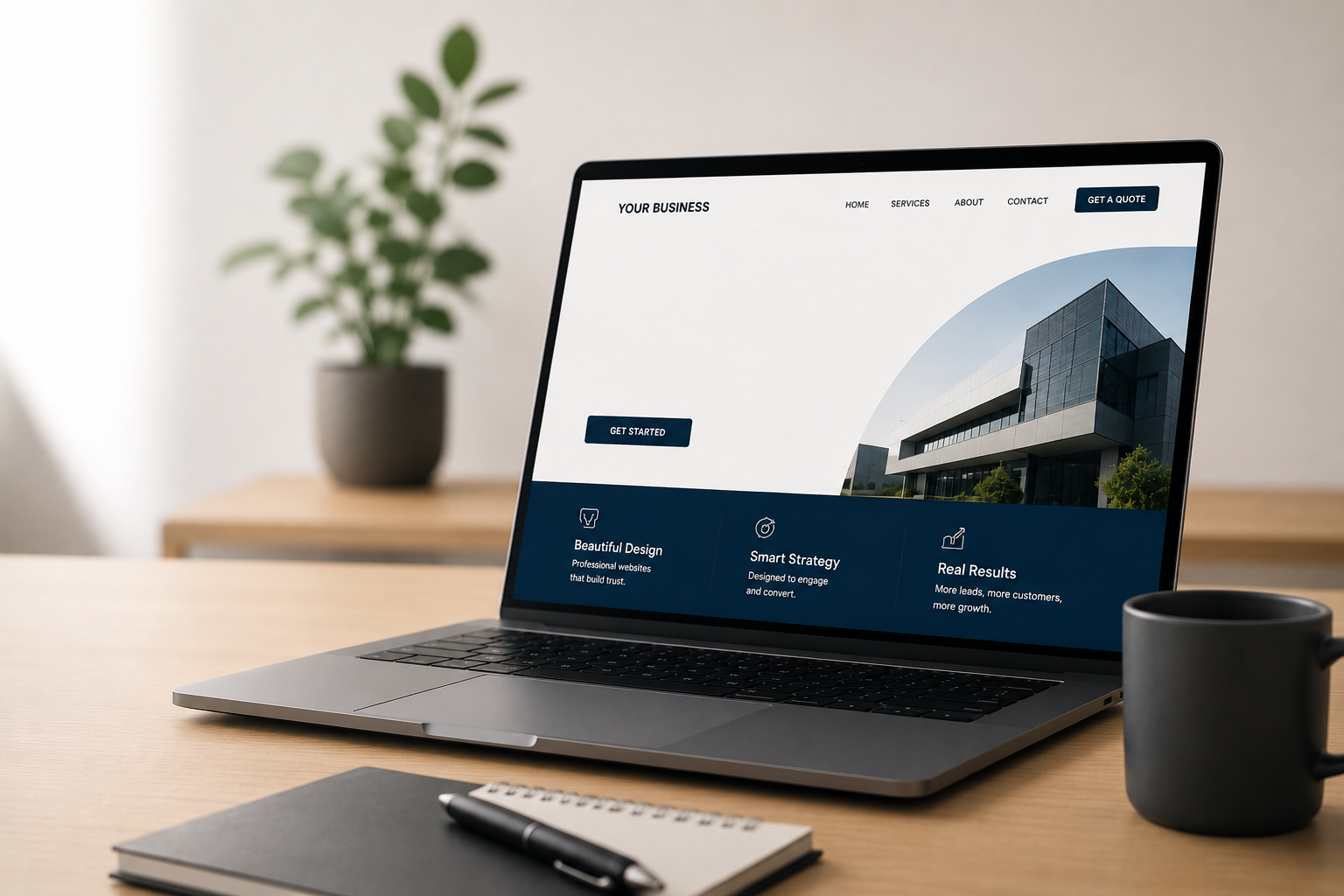
Every page should have a primary goal, such as booking a consultation, requesting a quote, or calling your office. Place your main call-to-action button above the fold and repeat it at logical points throughout the page. Use action-oriented language and remove distractions like excessive navigation links or pop-ups that interrupt the user.
Choosing the Right Platform for Your Small Business
The foundation of your website is the platform you build it on. Zapier evaluated the top website builders for small businesses and provides clear recommendations for different needs. Choosing the right one depends on your technical comfort, budget, and business model.
| Platform | Best For |
|---|---|
| Wix | Non-technical users who want drag-and-drop simplicity |
| Squarespace | Service-based businesses needing a polished, design-forward look |
| Shopify | eCommerce and product-based businesses |
| Webflow | Advanced design and custom interactions |
| WordPress.org | Free, open-source platform with full control |
| Hostinger | Budget-friendly options with built-in hosting |
| Ghost | Content creators and bloggers |
| Kajabi | Online courses and membership sites |
| Square | Restaurants, cafes, and food-based businesses |
If you want a website tailored specifically to your business, audience, and goals, working with a professional web design company can make a major difference. A custom website allows for stronger branding, better user experience, improved SEO structure, and higher conversion potential compared to generic templates.
Project costs and timelines can vary widely depending on the size of the site, the features required, ecommerce functionality, content creation, and the overall complexity of the build. Before choosing a provider, it is important to review their portfolio, understand their process, and make sure their design style aligns with your business goals.

Practical Steps for Better Conversions
Beyond choosing a platform and polishing visuals, there are straightforward actions you can take to increase the number of booked jobs from your site.
Understand Your Audience and Write for Them
SBDCNet advises starting with a clear understanding of your target audience. Write headlines that speak directly to their pain points. For example, instead of “We Offer Plumbing Services,” try “Unclog Your Drain in Under Two Hours.” Speak their language and show empathy for their situation.
Make Your Site Accessible and Mobile-Friendly
More than half of local searches happen on mobile devices. If your site is not optimized for small screens, you are likely losing leads. Ensure buttons are easy to tap, text is readable without zooming, and forms require minimal typing. Accessibility also means ensuring your site works well with screen readers, which expands your audience and improves your search rankings.
Include Secure Payment and Contact Options
SBDCNet also stresses the importance of secure payment processing and clear contact information. Even if you do not sell products online, customers need to trust that their email or phone number is safe when they fill out a form. Use HTTPS, display a privacy policy, and make your phone number clickable on mobile devices.
Automate Lead Capture and Follow-Up
A website can only convert prospects if you respond quickly. Integrating an automated system that sends an instant confirmation or scheduling link the moment someone submits a form can dramatically increase your conversion rate. For many small businesses, a simple booking tool embedded on the site is enough to turn inquiries into confirmed appointments.
Test and Refine Continuously
Conversion optimization is not a one-time task. Small changes to headlines, button colors, or form length can make a measurable difference. Set up basic analytics to see where visitors drop off, then experiment with one adjustment at a time. Over several months, these incremental improvements compound into significantly more leads.
In 2026, small business web design is about more than looking professional, it is about creating a reliable system that turns each visitor into a booked customer. By focusing on audience understanding, mobile-friendly design, clear calls to action, and rapid follow-up, your website can become your most effective lead generation tool. Start with a platform that fits your skills and budget, then refine based on real visitor behavior. The businesses that treat their website as a living, optimizing asset will consistently outperform those that treat it as a static brochure.
Frequently Asked Questions
Do I need a website if I already use social media?
While social media is a valuable tool, it is not a replacement for a website. About one in five small businesses rely solely on social media, but you do not control the platform. A website gives you a permanent hub that you own, where you can fully control the customer experience and optimize for conversions.
Should I use a website builder or hire a designer?
It depends on your technical confidence and design needs. If you want a simple, professional site quickly and are comfortable using drag-and-drop tools, a builder like Wix or Squarespace works well. If you need custom functionality, advanced design, or a site that grows with your business, hiring a professional designer may be worth the investment.
What is the most important conversion element on a website?
Clarity is the most critical element. Your visitors should know within seconds what you offer and how to take the next step. A clear headline, a visible call-to-action button, and a simple way to contact you or book a service are far more important than flashy animations or complex layouts.